65th Course on Palladian Architecture
Palladio and Venice: politics and architectureVicenza + Venice + Veneto, 30 August - 5 September 2023
Lecturers
Guido Beltramini, Direttore CISA Andrea Palladio

Guido Beltramini has been director of the Centro Internazionale di Studi di Architettura (CISAAP) since 1991. He was a contract professor at the University of Ferrara from 1994 to 2002 and has been a visiting professor at the Harvard University Graduate School of Design since 2015. His main interest is the history of Renaissance architecture, with a special focus on Palladio, Venetian architecture, the art of war, and the study of the Antique.
Howard Burns, Scuola Normale Superiore, Pisa
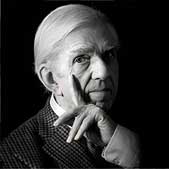
Chairman of the CISAAP Advisory Board, Howard Burns has taught at the University of Cambridge, the Courtauld Institute of Art, Harvard University, the IUAV, Venice, and the Scuola Normale Superiore, Pisa, of which he is now professor emeritus. He has played a major role in the preparation of all the CISAAP exhibitions as well as in the organisation of exhibitions on Raphael (Rome, 1984), Giulio Romano (Mantua, 1989) and Francesco di Giorgio (Siena, 1993). His publications include essays on Filippo Brunelleschi, Leon Battista Alberti, Francesco di Giorgio, Raphael, Baldassarre Peruzzi, Giulio Romano, Pirro Ligorio, Michele Sanmicheli and Michelangelo.
Gianmario Guidarelli, Università degli Studi di Padova

Gianmario Guidarelli is Associate Professor of Architectural History at the University of Padua (DICEA) and Adjunct Professor at the Theological Faculty of Triveneto. He coordinates the projects Chiese di Venezia. Nuove prospettive di ricerca, Armonie Composte. Ciclo di seminari sul paesaggio monastico (with Elena Svalduz), and La città medievale. La città dei frati. Medieval city. City of the friars (with Silvia Beltramo). He is the Principal Investigator of the PRIN 2022 research project CoenoBI(u)M. Art and Architecture of the Cassinese Benedictine Congregation (15th–18th century): Strategies for Digital and Spatial Analysis through BIM Models. He is a resident member and Scientific Board member of the Ateneo Veneto di Scienze, Lettere ed Arti. Since 2024, he has served as the Editor-in-Chief of Ateneo Veneto (classified in band A for sector E 8). He has published monographs and articles in international journals on the history of medieval and Renaissance architecture, with particular focus on Venice. His current research focuses on religious architecture in the Renaissance and on the theme of the monastic landscape in Italian Humanism.
Deborah Howard, St John’s Collage, Cambridge
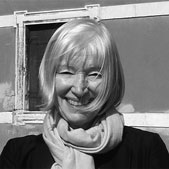
Deborah Howard is Professor Emerita of Architectural History at the University of Cambridge, where she is a Fellow of St John’s College. She is also a Fellow of the British Academy. She specialises in the art and architecture of Venice and the Veneto, and her numerous publications include Jacopo Sansovino (1975, 1987); The Architectural History of Venice (1980, rev. 2002); Venice & the East (2000); Architecture and Music in Renaissance Venice (2009); Venice Disputed (2011) and The Sacred Home in Renaissance Italy (with M. Laven and A. Brundin, 2018). She is currently engaged in a research project on the proto-industrial architecture of the Veneto in the sixteenth and seventeenth centuries.
Francesco Marcorin, Curatore del Palladio Museum

Having graduated with the a first-class degree in architecture, Francesco Marcorin obtained a PhD from the Venice University Institute of Architecture (iuav) with a thesis on Michele Sanmicheli (2014). He then collaborated with the State Archives in Verona, where he conducted an initial re-ordering of the archive of Bevilacqua di San Michele alla Porta.
In addition to studies on Sanmicheli and his workshop, his current research interests include spolia in the Late Antique and Modern Ages, Renaissance architectural theory, and patronage and art collecting in 16th to 18th century Veneto.
Walter Panciera, Università di Padova
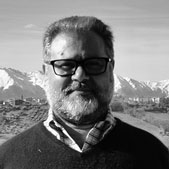
Professor of Modern History in the Department of Historical, Geographical and Ancient Sciences at the University of Padua, he lectures on Modern History and the History of the Republic of Venice. A member of the Research Doctorate Panel for the Archaeological, Artistic and Historical Sciences at the University of Verona, he also chairs the Education Commission of the Coordination of History Societies and is a member of the Advisory Committee for the journal Mediterranea - ricerche storiche (Palermo). He has published numerous articles and seven monographs on social, political and economic history, mainly on the Republic of Venice, as well as three handbooks on teaching history. In 2021, he published L'acqua giusta. Il sistema portuale veneziano nel XVIII secolo and The Republic of Venice in the 18th Century (both Edizioni Viella, Rome).
Damiana Lucia Paternò, SABAP per l’area metropolitana di Venezia
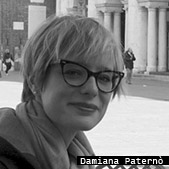
Graduated in Architecture from Università Iuav di Venezia in 2008, she earned a PhD in Conservation of Architectural Heritage from Politecnico di Milano in 2013. Since 2008, she has been involved in teaching as an assistant at Università Iuav di Venezia. At the same institution, she has held research fellowships and served as adjunct professor in Architectural Restoration. She has conducted studies on the construction techniques used by Andrea Palladio, developing a cataloguing project in partnership with the Centro internazionale di studi di architettura Andrea Palladio, with which she has collaborated since 2010. She has participated in national and international conferences and authored essays and articles on the physical substance of Palladio’s works and their restorations, publishing the book Palladio nel tempo. Trasformazioni, autenticità, mito tra Ottocento e Novecento (2014).
Since 2018, she has worked as an architect officer at the Soprintendenza Archeologia Belle Arti e Paesaggio for the metropolitan area of Venice and the provinces of Belluno, Padua, and Treviso, where she is also functional area coordinator for education and research and liaison for the Landscape Plan of the Veneto Region.
Elena Svalduz, Università di Padova
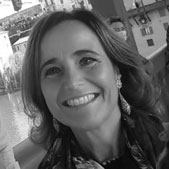
Elena Svalduz is Associate Professor of History of Architecture in the Department of Cultural Heritage at the University of Padua. Her principal interests are the history of architecture, the history of the city in the modern age, and the historical landscape. A member of both the AISU Board of Directors and the Steering Committee of Visualizing Cities since 2017, with Gianmario Guidarelli she jointly curates the "Armonie composte" project and publishing series on the monastic landscape (www.armoniecomposte.org).
