Palladio MuseumVicenza, palazzo Barbarano
4. The paper room
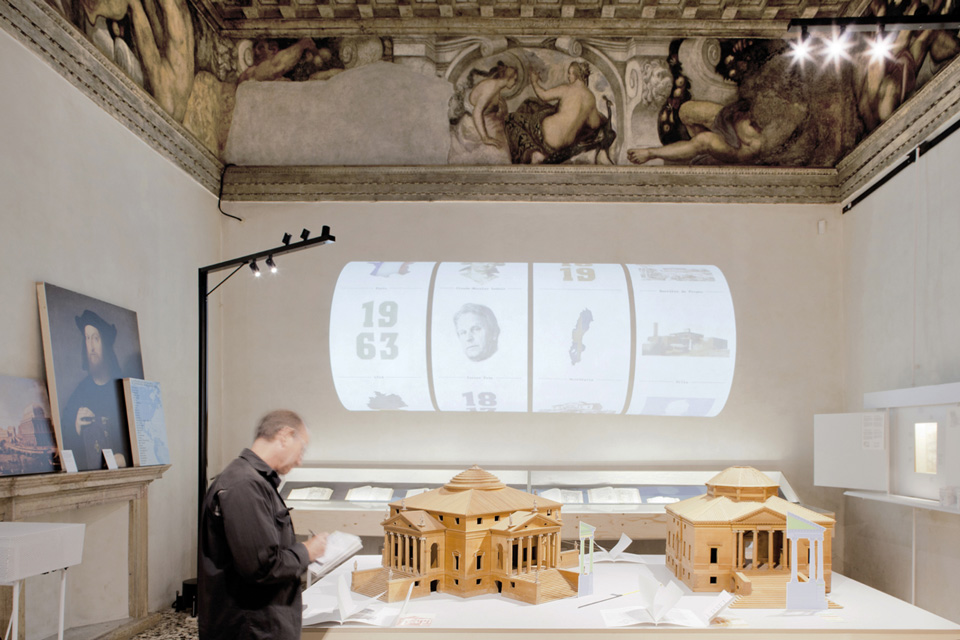
Venice in Palladio’s day was the European capital of printing, and he soon learned to master this new medium. He published two guides to the Antiquities and Churches of Rome (1554), respectively, as well as illustrating Vitruvius’ De Architectura (1556) and Julius Caesar’s De bello Gallico (1575). But what brought him fame were The Four Books on Architecture, published in 1570. In this work he presented architecture as a language, with a selected vocabulary of standard ‘words’ – rooms, doors, windows, columns – and a syntax of harmonious proportions between the parts. He included his own designs as examples of the possible variants of this language. In further ‘translations’, subsequent generations of architects would reshape country mansions and their landscape in the Netherlands, Britain, Russia and the United States. The iconic Villa Rotonda is an exception to the standardisation. It has been used as a model for five centuries in some eighty buildings around the world, as can be seen on the colourful spinning wheels of the slot machine behind you.
Audio guide
