Palladio MuseumVicenza, palazzo Barbarano
8. The Venice room
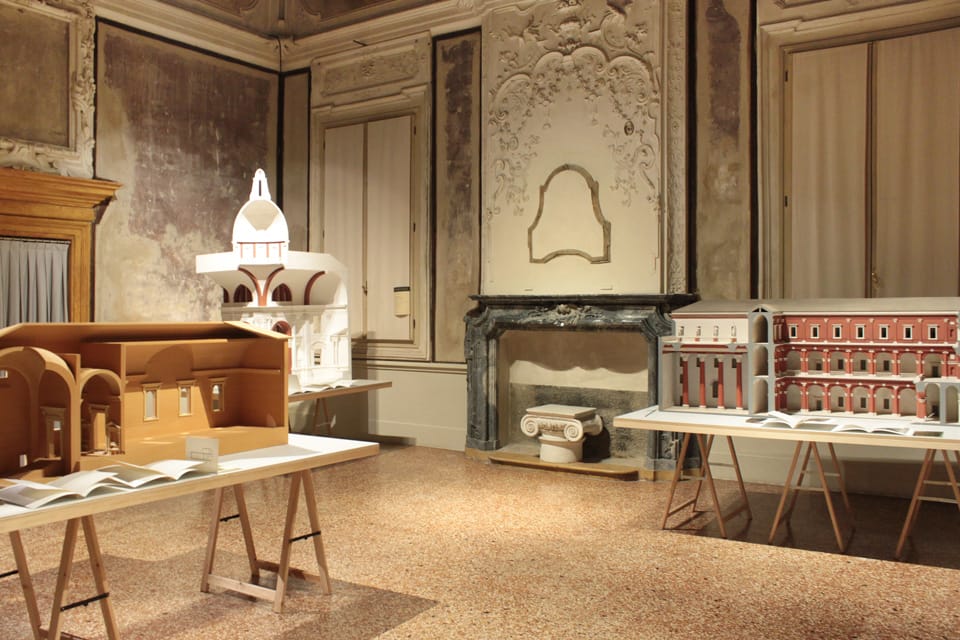
When we think of Palladio’s architecture, we imagine it as being white. Yet, for about ten years, from around 1555 to 1565, Palladio introduced a stark contrast between the white of marmorino plastered walls and the red of the painted columns and bands of entablatures. Traces of this two-tone scheme, lost due to whitewashing over the centuries, have been detected in the Villa Foscari, the monastery of the Carità, the church of San Giorgio Maggiore interior in Venice and the Loggia del Capitaniato in Vicenza. We don’t know the reason for this surprising colour choice. It was certainly made by Palladio because he devised special techniques for the parts to be coloured red involving a much more expensive process than traditional whitewashing.
We don’t even know why Palladio gave up experimenting with colour: the magnificent church of the Redentore, designed ten years after San Giorgio, is entirely white.
Audio guide
